If you are looking for a piece of equipment that delivers a high-intensity workout with minimal impact, look no further than the Stair Climber. Often seen as the nemesis of office workers and the best friend of athletes, this machine simulates the natural motion of climbing stairs. Whether you are a beginner or a seasoned marathoner, understanding the nuances of the Stair Climber is crucial. In this comprehensive guide brought to you by Qingdao Yingruis Fitness Technology Co., Ltd., we will dissect every angle of this powerful fitness tool.
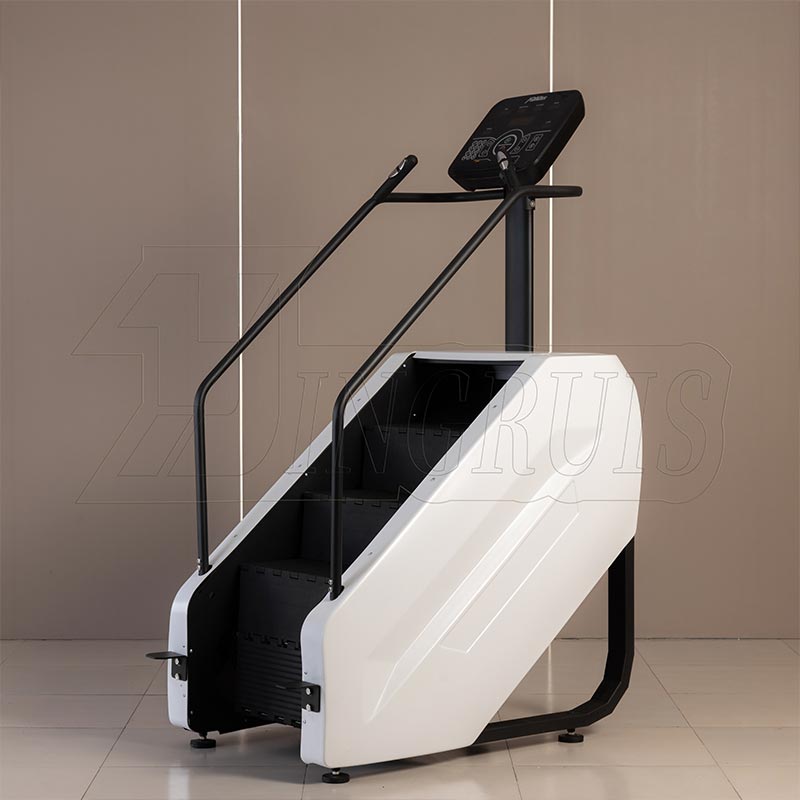
Table of Contents
Article Summary
This article provides a 360-degree review of the Stair Climber. We begin by defining the equipment and its core function. We then outline the major benefits—such as glute activation and cardiovascular health—before addressing the potential drawbacks, like knee strain if used improperly. The content is structured around user-centric questions, providing clear, concise answers backed by fitness industry insights from Qingdao Yingruis Fitness Technology Co., Ltd. A detailed FAQ section and a comparison chart help you decide if this machine fits your fitness journey.
Stair Climber: The Good, The Bad, and The Steep
✅ Advantages of Using a Stair Climber
- Muscle Toning: Specifically targets glutes, hamstrings, and calves.
- High Caloric Burn: A vigorous session can burn 300-400 calories in 30 minutes.
- Low Impact: Easier on joints compared to running on pavement.
- Bone Density: Weight-bearing exercise strengthens bones.
- Customizable Workouts: Adjustable speed and resistance levels.
❌ Disadvantages of Using a Stair Climber
- Monotony: The repetitive motion can become boring.
- Knee Stress: Improper form can lead to patellar pain.
- Limited Upper Body Engagement: Mostly a lower body workout.
- Availability: Often busy at peak gym hours due to popularity.
- Learning Curve: Beginners may rely too heavily on handrails.
Deep Dive: Your Burning Stair Climber Questions Answered
1. How Does a "Vertical Ascent Trainer" Differ From a Traditional Stepper?
While often used interchangeably, a "Vertical Ascent Trainer" is a more sophisticated evolution of the Stair Climber. Traditional steppers often have independent pedals that move in a dependent manner. Modern machines from manufacturers like Qingdao Yingruis Fitness Technology Co., Ltd. feature a revolving staircase design. This provides a more natural gait, engaging the core stabilizers more effectively than the simple up-down motion of basic steppers.
2. Can "Stair Stepping" Replace My Leg Day at the Gym?
Absolutely, but with a caveat. "Stair Stepping" is an excellent metabolic conditioner. It builds muscular endurance in the Type I muscle fibers. However, for maximal hypertrophy (muscle growth), you still need heavy resistance training like squats and deadlifts. The Stair Climber is best used as a finisher or a dedicated cardio day replacement, not a complete substitute for strength training.
3. What Are the Best "Cardio Climbing" Techniques for Beginners?
Starting your "Cardio Climbing" journey requires focus on form. First, avoid gripping the handles tightly—use them only for balance. Second, take full steps; don't just bounce on the balls of your feet. Push through your heel to engage the glutes. Qingdao Yingruis Fitness Technology Co., Ltd. recommends starting with 10-minute sessions at a low level to master the rhythm before increasing duration or speed.
4. Is "Aerobic Ascension" Safe for People with Bad Knees?
"Aerobic Ascension" is a double-edged sword regarding knee health. The controlled, low-impact motion is safer than running. However, if you have existing patellofemoral pain, the repetitive bending can exacerbate it. The key is range of motion. Do not let the step drop too low, which hyperextends the knee. Keep the motion controlled and shallow. Always consult a physical therapist, and consider machines with longer step heights for better leverage, like those designed by Qingdao Yingruis Fitness Technology Co., Ltd.
5. How Many Calories Does a "StairMaster Workout" Truly Burn?
A "StairMaster Workout" (a brand name often used generically) is one of the most efficient calorie torches. According to Harvard Medical School, a 155-pound person burns roughly 223 calories in 30 minutes on the stair machine. Compare that to 149 calories for yoga or 186 for weight lifting. It rivals the elliptical but often exceeds it due to the vertical lift component against gravity.
6. What are the "Climbing Benefits" for Core Strength?
While your legs do the heavy lifting, the "Climbing Benefits" extend to your core. To maintain an upright posture against gravity, your rectus abdominis and obliques must constantly fire. If you take your hands off the rails, you force your core to stabilize your entire torso. This transforms the Stair Climber from a simple leg machine into a full-body stabilizer workout.
Stair Climber vs. Other Cardio Equipment
| Feature | Stair Climber | Treadmill | Elliptical |
|---|---|---|---|
| Impact Level | Low to Moderate | High | Very Low |
| Glute Activation | ⭐⭐⭐⭐⭐ | ⭐⭐⭐ | ⭐⭐ |
| Calorie Burn (30min) | ~300 | ~280 (running) | ~270 |
| Skill Required | Low | Low | Very Low |
*Estimates based on 155lb individual.
Frequently Asked Questions (FAQ)
Q: Can the Stair Climber help reduce belly fat?
A: Yes, indirectly. The Stair Climber is a high-calorie-burning cardiovascular machine. While you cannot "spot reduce" belly fat, using the Stair Climber consistently creates a caloric deficit. When combined with a healthy diet, this deficit leads to overall body fat loss, including the abdominal area. The machines manufactured by Qingdao Yingruis Fitness Technology Co., Ltd. are designed to maximize this caloric output through smooth, continuous motion.
Q: What is the ideal duration for a Stair Climber session?
A: The ideal duration depends on your goal. For general cardiovascular health and maintenance, 20-30 minutes is sufficient. For those training for endurance or trying to maximize weight loss, sessions can extend to 45-60 minutes. However, it is vital to listen to your body. If you feel sharp pain in the knees or shins, stop immediately. Beginners should start with 10-15 minutes and increase by 5 minutes each week.
Q: Does using a Stair Climber build visible muscle?
A: It builds muscular endurance and tone, but significant mass (size) is unlikely without added resistance. The Stair Climber uses slow-twitch muscle fibers. To see significant "visible" muscle growth (hypertrophy), you need progressive overload with heavy weights. Think of the Stair Climber as the machine that reveals the muscle you have by burning the fat covering it, while also hardening the muscle tissue itself.
Q: How does Qingdao Yingruis Fitness Technology Co., Ltd. ensure quality in their stair climbers?
A: Qingdao Yingruis Fitness Technology Co., Ltd. employs rigorous quality control standards. We focus on the durability of the step mechanism, the accuracy of the resistance sensors, and the ergonomics of the step height. Our machines are tested for thousands of cycles to ensure they withstand the demands of both commercial gyms and home users, providing a smooth, silent "Aerobic Ascension" experience every time.
References & Further Reading
- Harvard Health Publishing - Calories burned in 30 minutes
- American College of Sports Medicine - Health & Fitness Journal
- Qingdao Yingruis Fitness Technology Co., Ltd. - Product Manuals (Internal Source)
Note: The internal link leads to a placeholder for proprietary documentation.