News
How Does a Commercial Electric Treadmill Improve Gym Training?
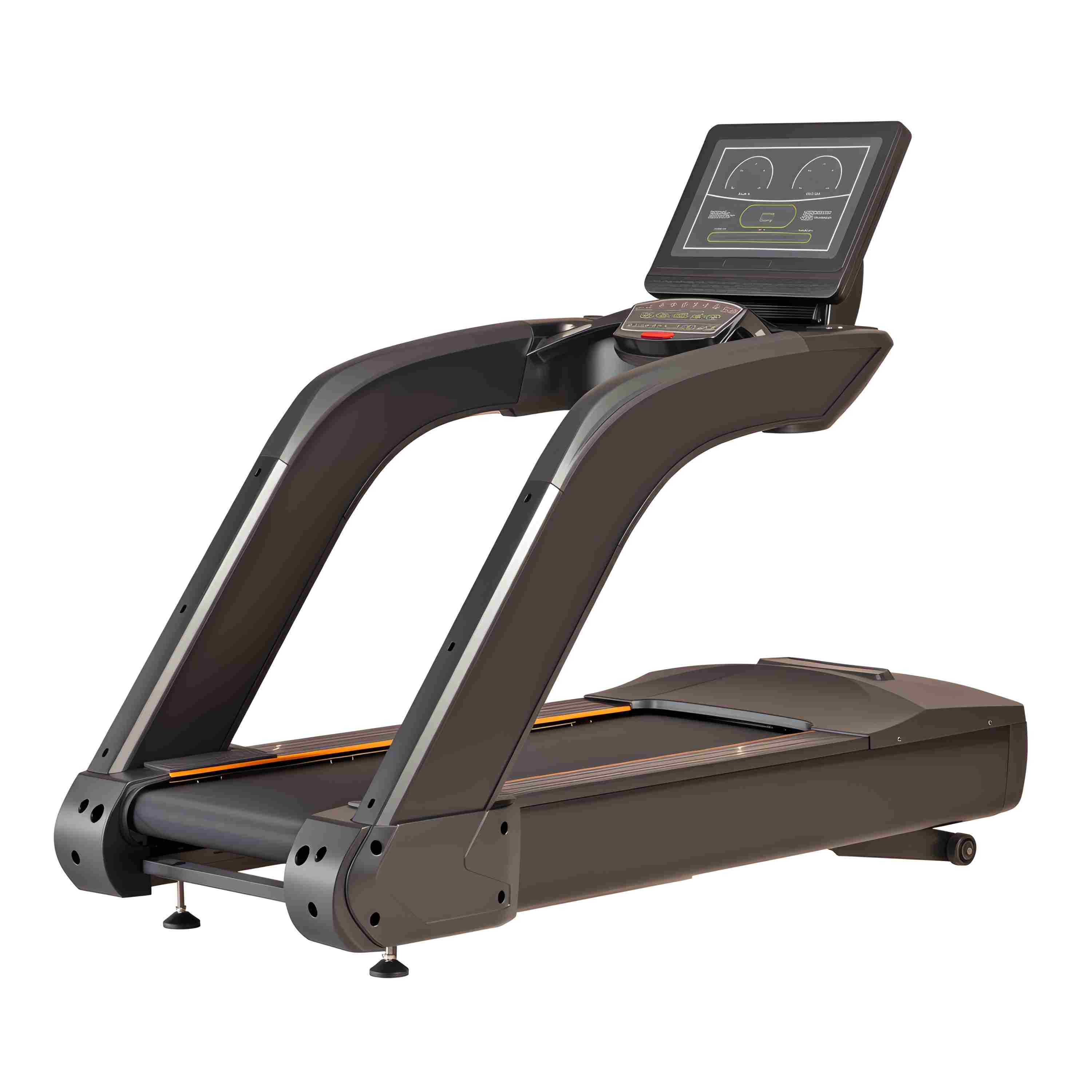
A Commercial Electric Treadmill helps fitness centers improve training efficiency by providing consistent speed control, adjustable incline, stable running performance, and convenient workout monitoring. In this article, Yingruis explains how motor performance, running belt design, shock absorption, and equipment maintenance influence daily gym operations, helping gym owners understand what to consider when selecting commercial treadmill equipment.
Contents
- 1. Why Commercial Electric Treadmills Matter in Modern Gyms
- 2. How Motor Performance Supports Consistent Training
- 3. How Speed and Incline Adjustment Improve Workout Flexibility
- 4. Why Running Belt Design Affects Training Experience
- 5. How Shock Absorption Improves Running Comfort
- 6. Commercial Treadmill Applications Across Different Gym Programs
- 7. Maintenance Considerations for Commercial Treadmills
- 8. What to Consider When Choosing a Commercial Electric Treadmill
- 9. Frequently Asked Questions
1. Why Commercial Electric Treadmills Matter in Modern Gyms
In a commercial fitness center, the treadmill is often one of the most frequently used cardio machines. Members use it for warm-ups, steady-state running, interval training, walking, and endurance development. Unlike equipment designed for occasional household exercise, a commercial treadmill needs to accommodate repeated use by different people throughout the day.
At Yingruis, we believe that a good Commercial Electric Treadmill should do more than simply provide a moving running belt. It should deliver predictable performance, straightforward operation, and a comfortable training experience across different fitness levels.
For gym operators, the benefits are practical:
- Consistent training conditions: Adjustable speed and incline allow members to follow different workout plans on the same machine.
- More flexible cardio programs: Users can switch between walking, jogging, endurance running, and interval sessions.
- Better equipment utilization: Multiple users can operate the same machine throughout the day with different training settings.
- Convenient workout monitoring: A suitable console helps users track exercise information and adjust their training intensity.
- Improved member experience: Stable operation, accessible controls, and suitable cushioning make regular workouts more comfortable.
These advantages make commercial electric treadmills an important part of cardio equipment planning for fitness clubs, hotel gyms, rehabilitation-oriented fitness spaces, and corporate wellness centers.
2. How Motor Performance Supports Consistent Training
The motor is one of the most important components of an electric treadmill because it drives the running belt and determines how the machine responds to changes in speed and exercise intensity.
In a commercial environment, the motor must handle repeated acceleration, deceleration, and extended operating periods. A treadmill used for occasional home workouts has different operating demands from one installed in a busy fitness center where several members may use it consecutively.
When evaluating treadmill motor performance, we recommend looking beyond a single horsepower figure. The following factors provide a more complete picture:
| Motor Performance Factor | Why It Matters | What Gym Operators Should Check |
|---|---|---|
| Rated Motor Power | Indicates the motor's specified continuous operating output | Compare rated power rather than relying only on peak horsepower |
| Speed Response | Affects transitions between walking, jogging, and running | Check acceleration and deceleration smoothness |
| Operating Stability | Influences performance during repeated workouts | Observe belt movement and motor behavior under different loads |
| Heat Management | Helps control operating temperatures during extended use | Review ventilation and motor cooling design |
| Drive System | Transfers motor power to the running belt | Check belt alignment, tension, and transmission condition |
For example, a member may begin with a five-minute walking warm-up, increase the speed for a running interval, and then slow down for recovery. If the motor responds inconsistently or the belt movement becomes unstable, the training experience can be interrupted.
For this reason, we recommend evaluating a commercial electric treadmill under realistic operating conditions rather than selecting equipment based on motor power specifications alone.
3. How Speed and Incline Adjustment Improve Workout Flexibility
Speed and incline adjustment allow one treadmill to support several training objectives. This is especially useful in commercial gyms where members have different exercise habits, physical conditions, and fitness goals.
Speed adjustment supports the transition between low-intensity walking, moderate jogging, and higher-intensity running. Incline adjustment increases the challenge of a workout by changing the running surface angle, making it possible to introduce uphill walking and running sessions without requiring outdoor terrain.
We generally divide common treadmill workouts into several categories:
| Training Type | Typical Settings | Primary Training Purpose |
|---|---|---|
| Walking | Low speed, flat or slight incline | Warm-up, daily activity, and low-impact cardio |
| Steady-State Running | Moderate speed, stable incline | Building aerobic endurance |
| Interval Training | Alternating higher and lower speeds | Changing exercise intensity within one session |
| Incline Walking | Walking speed with increased incline | Increasing workout intensity without running |
| Recovery Exercise | Low speed and flat running surface | Gradually reducing exercise intensity |
For gym operators, adjustable speed and incline also help maximize the usefulness of each machine. Instead of assigning separate equipment to every training style, one appropriately configured commercial gym treadmill can accommodate a broader range of cardio activities.
When comparing models, check the available speed range, incline adjustment method, control response, and whether users can change settings conveniently during exercise.
4. Why Running Belt Design Affects Training Experience
The running belt is the surface that directly contacts the user's feet, so its design has a noticeable influence on comfort and machine stability. A belt that is too narrow may restrict natural movement, while unsuitable belt tension or poor alignment can cause uneven running and unnecessary maintenance issues.
At Yingruis, we consider the running belt and deck as a coordinated system rather than isolated components. Their dimensions, surface characteristics, alignment, and compatibility with the drive system all affect the overall treadmill experience.
Before purchasing a commercial treadmill, gym operators should examine several details:
- Running area: The belt width and length should accommodate the expected users and running speeds.
- Surface grip: The belt should provide suitable traction during walking and running.
- Belt alignment: The belt should remain centered during operation without repeatedly drifting to one side.
- Deck construction: The running deck should be suitable for the expected frequency and intensity of use.
- Maintenance access: Routine inspection, lubrication, and belt adjustment should be manageable.
For example, a gym serving taller members and regular runners may need a larger running area than a compact hotel fitness room primarily used for walking and light jogging. Matching the running surface to the actual user profile is more useful than choosing a machine based on appearance alone.
5. How Shock Absorption Improves Running Comfort
Every running step produces impact between the user's foot and the running surface. A treadmill cushioning system is designed to manage some of this impact and improve the feel of the running deck.
For commercial fitness equipment, the challenge is balancing cushioning and stability. A running surface that feels excessively soft may affect running comfort and stability, while a very firm surface may feel uncomfortable during longer sessions for some users.
When assessing a treadmill shock absorption system, we recommend paying attention to:
- The cushioning structure beneath the running deck.
- How evenly the running surface responds under different foot-strike positions.
- Whether the deck remains stable during faster running sessions.
- Noise and vibration during operation.
- The durability of cushioning components under repeated loading.
A well-designed cushioning system can contribute to a more comfortable workout, particularly for members who use treadmills frequently or spend longer periods on cardio equipment. However, cushioning should not be treated as a substitute for proper running technique, suitable footwear, or appropriate training intensity.
6. Commercial Treadmill Applications Across Different Gym Programs
A commercial electric treadmill can serve several purposes depending on the facility's membership profile and training programs. We recommend considering the intended application before deciding on the number and configuration of machines.
| Application | Typical Users | Important Equipment Considerations |
|---|---|---|
| Commercial Fitness Clubs | Members with different fitness levels | Operating stability, durability, and easy controls |
| Hotel Fitness Rooms | Travelers and occasional exercisers | Simple operation, compact layout, and convenient maintenance |
| Corporate Gyms | Employees exercising before or after work | Flexible workout settings and reliable daily operation |
| Personal Training Studios | Clients following structured training programs | Responsive speed controls and workout versatility |
| Residential Fitness Facilities | Apartment and community residents | User-friendly operation and suitable space planning |
For facilities combining cardio and resistance training, treadmills can also work alongside strength equipment and functional training stations. This creates a more complete workout environment rather than limiting the facility to a single exercise category.
Yingruis offers a broader fitness equipment range covering cardio training machines, strength training equipment, Pilates equipment, and multifunctional training equipment. These product categories allow fitness facilities to plan different training areas through one equipment supplier.
7. Maintenance Considerations for Commercial Treadmills
Even a well-designed commercial treadmill requires routine maintenance. In a busy gym, small issues such as belt misalignment, insufficient lubrication, or accumulated dust around the motor compartment can gradually affect machine performance.
We recommend establishing a maintenance schedule based on actual usage frequency and the manufacturer's instructions.
| Maintenance Item | Recommended Inspection | Purpose |
|---|---|---|
| Running Belt | Check alignment, tension, and surface condition | Maintain smooth belt movement |
| Running Deck | Inspect wear and follow lubrication requirements | Reduce unnecessary friction |
| Motor Compartment | Check ventilation and remove accumulated dust | Support heat dissipation |
| Console and Controls | Test buttons, display, and adjustment functions | Maintain reliable user operation |
| Fasteners and Frame | Inspect bolts, connections, and structural components | Identify loosening or unusual movement |
We do not recommend applying the same lubrication interval to every treadmill model. Different running belt materials and deck systems may have different maintenance requirements. Gym operators should follow the manufacturer's maintenance instructions and record recurring problems to identify patterns before they lead to equipment downtime.
8. What to Consider When Choosing a Commercial Electric Treadmill
When purchasing commercial cardio equipment, the lowest initial price does not always represent the best long-term value. Motor performance, structural quality, maintenance access, warranty coverage, and spare parts availability all influence the actual operating cost.
Based on our experience in fitness equipment manufacturing, we suggest using the following checklist when comparing commercial electric treadmill suppliers:
| Selection Factor | Questions to Ask the Manufacturer |
|---|---|
| Motor Specifications | What are the rated power and operating characteristics? |
| Speed and Incline | What adjustment ranges and control functions are available? |
| Running Surface | What are the running belt dimensions and deck specifications? |
| Maximum User Weight | What is the tested maximum user weight for this model? |
| Cushioning System | What structure is used to manage running impact? |
| Safety Features | Does the treadmill include an emergency stop or safety key? |
| Quality Control | What production inspections and performance tests are performed? |
| After-Sales Support | Are spare parts, technical assistance, and warranty services available? |
For bulk procurement, we also recommend confirming packaging dimensions, shipping arrangements, spare parts policies, and the availability of product documentation. These details are particularly important for distributors, fitness equipment wholesalers, and operators opening multiple gym locations.
Founded in 1996, Qingdao Yingruis Fitness Technology Co., Ltd. has accumulated nearly three decades of experience in fitness equipment research and manufacturing. Our production capabilities cover manufacturing, assembly, export trade, and after-sales service. In 2024, we expanded our global business operations to serve growing international demand.
We focus on providing fitness equipment for both commercial and household applications, supported by production management, quality control, and customer service. For international projects, our team can discuss product configurations, order requirements, relevant certification documentation, and equipment selection based on the intended application.
Whether you are equipping a new fitness center or expanding an existing cardio area, selecting the right treadmill requires a balance between performance, user comfort, durability, and maintenance requirements. At Yingruis, we believe that understanding these factors before purchasing helps fitness facilities make more practical equipment decisions.
9. Frequently Asked Questions
What is the difference between a commercial electric treadmill and a home treadmill?
A commercial electric treadmill is designed for more frequent use in facilities such as gyms, hotels, and fitness centers. Its motor, frame, running surface, and maintenance requirements should be evaluated according to the expected usage intensity. Home treadmills are generally intended for lower-frequency personal use.
How does a commercial electric treadmill improve gym training?
It provides adjustable speed, incline options, a consistent running surface, and convenient workout controls. These functions support walking, jogging, endurance running, and interval training, allowing different members to use the same equipment for different fitness goals.
What motor power is suitable for a commercial treadmill?
The appropriate motor power depends on the treadmill's intended usage, maximum user weight, operating frequency, and design. When comparing models, check rated continuous motor power rather than relying only on peak horsepower claims.
Why is incline adjustment important for commercial treadmills?
Incline adjustment allows users to increase workout intensity by changing the running surface angle. It supports uphill walking and running programs and provides more training options without requiring additional cardio equipment.
How often should a commercial treadmill be maintained?
Maintenance frequency depends on daily usage and the manufacturer's specifications. Gym operators should regularly inspect belt alignment, running deck condition, motor ventilation, controls, and structural fasteners, while following the recommended lubrication and servicing schedule.
What safety features should a commercial electric treadmill have?
Important safety considerations include an emergency stop function or safety key, stable handrails, secure frame construction, reliable speed controls, and suitable electrical protection. The machine should also comply with the applicable safety requirements in its destination market.
Can Yingruis supply other fitness equipment besides commercial treadmills?
Yes. Yingruis provides several fitness equipment categories, including cardio machines, strength training equipment, Pilates equipment, and multifunctional training equipment. Our product range serves both commercial and household fitness applications.
What should distributors consider when purchasing commercial treadmills in bulk?
Distributors should compare model specifications, product consistency, quality inspection procedures, packaging, shipping costs, spare parts availability, warranty coverage, and after-sales support. Certification documents should also be checked against the specific products and destination market requirements.
Next:
-
Related News
- What Are the Latest Trends in Commercial Strength Training?
- Bulk Shipment News | Yingruis Supermodel Commercial Pilates Reformers Exported to Global Markets
- How Can a Spinning Bike Transform Your Fitness Routine?
- Yingruis Successfully Concludes Its Participation in 2026 Xiamen China Sport Show
- How Does a Pilates Bed Enhance Your Fitness Routine?
- How Can Commercial Spin Bike Transform Gym Performance and Member Experience?
Leave me a message
News Recommendations